
What types of all-weather USB chargers are available for outdoor furniture and small architectural forms (SAF)?
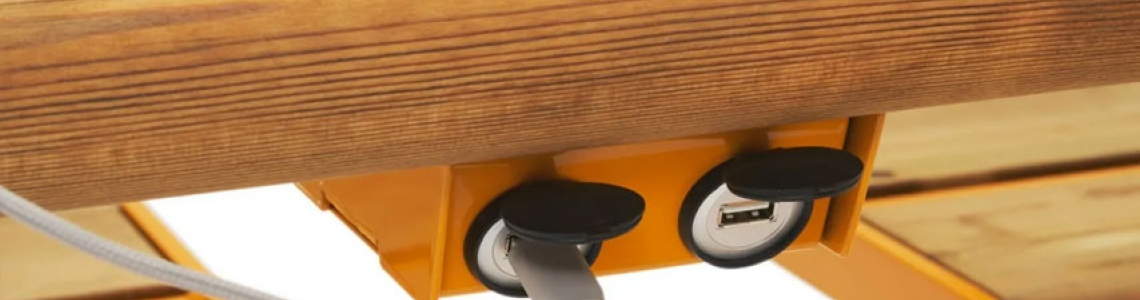
Modern public spaces are increasingly equipped with convenient services, and one of the key trends is providing the ability to charge mobile devices. Various types of outdoor USB chargers have been developed for integration into the urban environment, which can be broadly divided into three main categories.
1. Built-in (Integrated) Charging Devices
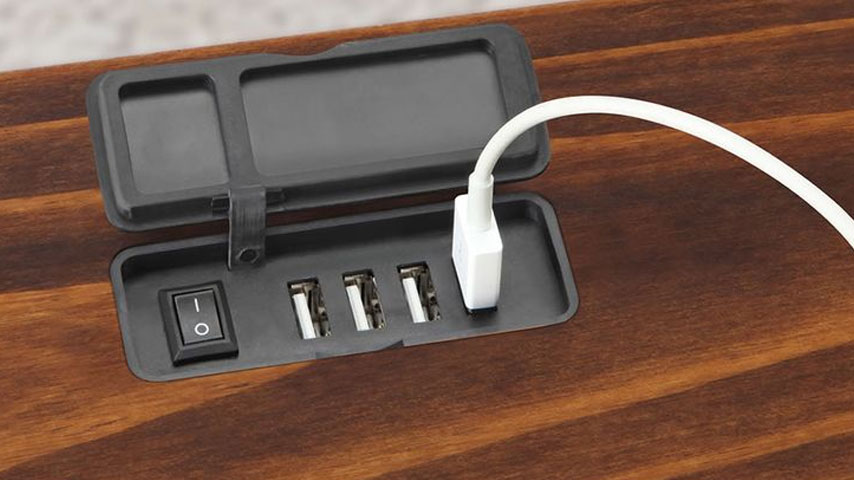
This is the most aesthetic and protected option, installed directly into the outdoor furniture structure during its production or later.
Installation Principle:
The device is built into the surface of a bench, table, armrest, or post, with its front panel flush with the furniture surface.
Advantages and Disadvantages:
- ✓ Aesthetics: The charging module looks like an organic part of the furniture design
- ✓ Protection: Better protection against mechanical damage and vandalism
- ✓ Convenience: Easy to use - sit on the bench and connect your cable
- ✓ All-Weather Performance: High dust and water protection rating (IP65, IP67)
- ✗ Complex Installation: Requires professional installation and surface preparation
- ✗ Limited Availability: Cannot always be installed on existing furniture
Where They're Used:
- Outdoor benches and park sofas
- Picnic tables and countertops
- Bench armrests and backs
- Information stands and signs
Model Selection and Prices - Outdoor USB Chargers

2. Surface-Mounted Charging Modules
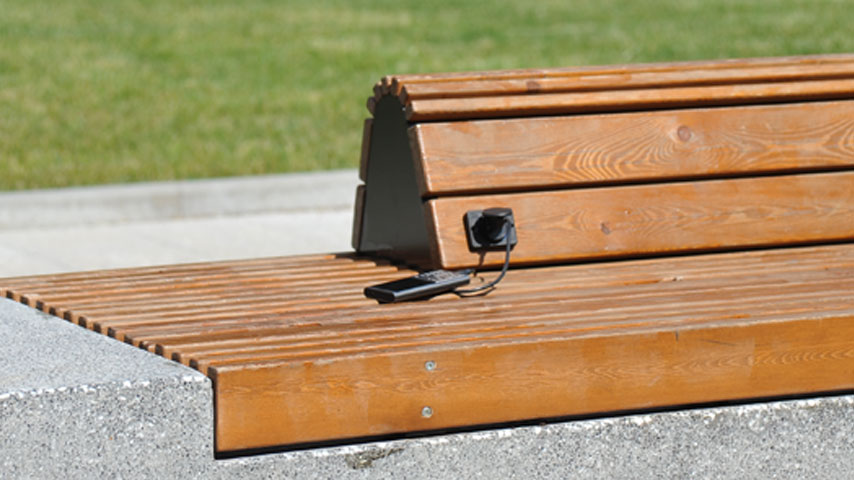
This type of solution is ideal for upgrading existing outdoor furniture without complex modifications.
Installation Principle:
The module is a ready-made unit that attaches to the furniture surface or SAF structure using screws or special adhesive.
Advantages and Disadvantages:
- ✓ Easy Installation: Doesn't require major construction work
- ✓ Versatility: Installation on any solid surface
- ✓ Flexibility: Easy to add charging functionality to existing furniture
- ✓ Affordability: More cost-effective than replacing furniture
- ✗ Less Aesthetic Appearance: May disrupt the design of existing furniture
- ✗ Vulnerability: More susceptible to vandalism than built-in models
Where They're Used:
- Upgrading old benches and tables
- Installation on poles and supports
- Mounting on pavilion walls, bus stops, pergolas
- Equipping retro objects
- Hotels and Resorts
Model Selection and Prices - Outdoor USB Chargers

3. Standalone Charging Stations (Posts)
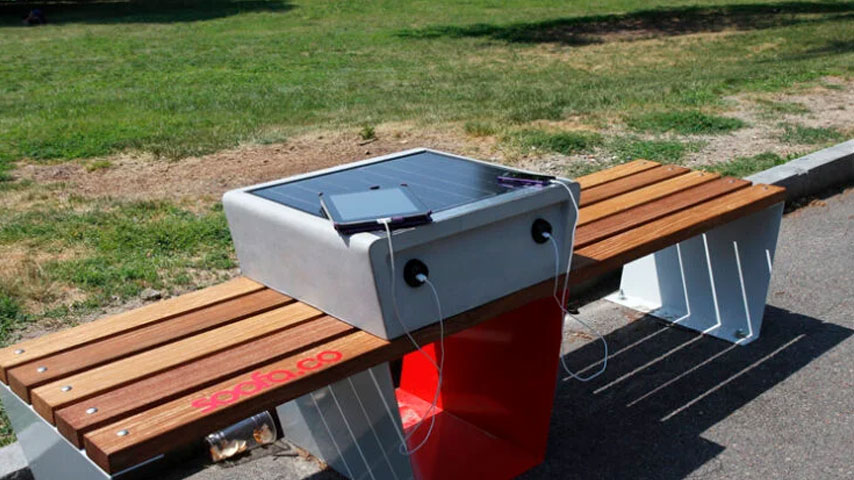
The most functional and noticeable solutions that themselves serve as urban design elements.
Installation Principle:
These are autonomous structures (posts, columns, pylons) installed on their own foundation or mounting near rest areas.
Advantages and Disadvantages:
- ✓ High Functionality: Combination of USB ports with 220V outlets
- ✓ Capacity: Multiple ports for simultaneous charging
- ✓ Visual Identification: Clear "Charge your device here" signal
- ✓ Additional Features: Wi-Fi, information screens, branding
- ✗ High Cost: Most expensive of all solution types
- ✗ Complex Installation: Require foundation preparation and utility connections
- ✗ Space Requirements: Need additional space for installation
Where They're Used:
- Central squares, parks, and public gardens
- Areas near shopping centers, train stations, airports
- Public spaces in residential districts
- Venues for mass events
Selection Criteria for Any Model
Regardless of type, all outdoor charging devices must meet key requirements:
- IP67/IP68 Protection Rating: Complete protection against dust and water
- Vandal-Resistant Design: Durable housing (steel, cast aluminum)
- Modern Charging Technologies: Type-C with Power Delivery (PD), QC3.0, QC4.0
- Electronic Protection: Against short circuits, overloads, overheating
- Smart IC System: Automatic selection of optimal current
Model Selection and Prices - Outdoor USB Chargers
The choice between built-in, surface-mounted, or standalone solutions depends on specific tasks, budget, and public space design. Built-in modules are ideal for new, harmonious designs. Surface-mounted ones are effective for quick upgrades. And standalone stations are expensive, complex-to-maintain solutions for key attraction points. Implementing any of these options makes the urban environment more comfortable, technologically advanced, and responsive to the needs of modern residents. Check out Top 10 USB Chargers for Outdoor Furniture.